


Moving image / S16mm film / 2019 13’ 5”
Collaboration with Simone Kenyon, commissioned by National Theatre of Scotland Funded by Creative Scotland Nominated for The Scottish Short Film Award, 2020.
How The Earth Must See Itself (A Thirling) is a response to the writing & thinking of Scots poet and writer, Nan Shepherd (1893–1981).
Screenings:
Glasgow Short Film Festival, Scotland, UK 2020
Regards Hybrides Festival, Montreal, Canada, 2022
Shortwaves Festival, Poland, 2021
Visions du Reél Festival, France, 2021
Encounters Festival Yorkshire, UK 2020
Newborn short film festival, Berlin, Germany 2020
Light Moves Festival (Ireland), 2021
Grounded (curator, Fiontàn Moran,Tate Modern), 2020
Phosphorescence Festival (Scotland), 2021
Dear Planet (Cop 26), 2021
Sentient Performativities Symposium (Dartington, UK) 2022
Deveron Arts, Scotland, UK 2020
Screendance Festival, Stockholm, Sweden, 2021
Earth Wind & Fire, Driftwood Cinema, Aberdeen, UK, 2022
C-Dare invites: The Body and Land, 2025
Dark Mountain film festival, 2020
Exhibitions:
Memo - Remembering the Future, at Fondation Martell (France) and at CID Grand Hornu (Belgium) June 13, 2025 - January 4, 2026 and March 29th - August 30th, 2026
Book Chapter:
Jeanne Schaff in, Intermedial Art Practices as Cultural Resilience (Eds. Lindsay Blair, Camille Manfredi) Taylor and Francis (2025)
More info:
Nan lived her whole life in the Cairngorm district of Scotland which is the UK’s only subarctic mountain range. She described herself as ‘thirled’ (tied) to the mountains which she walked from childhood to old age. The Living Mountain, her gorgeously uncategorizable book, attempts to describe her long relationship with them.
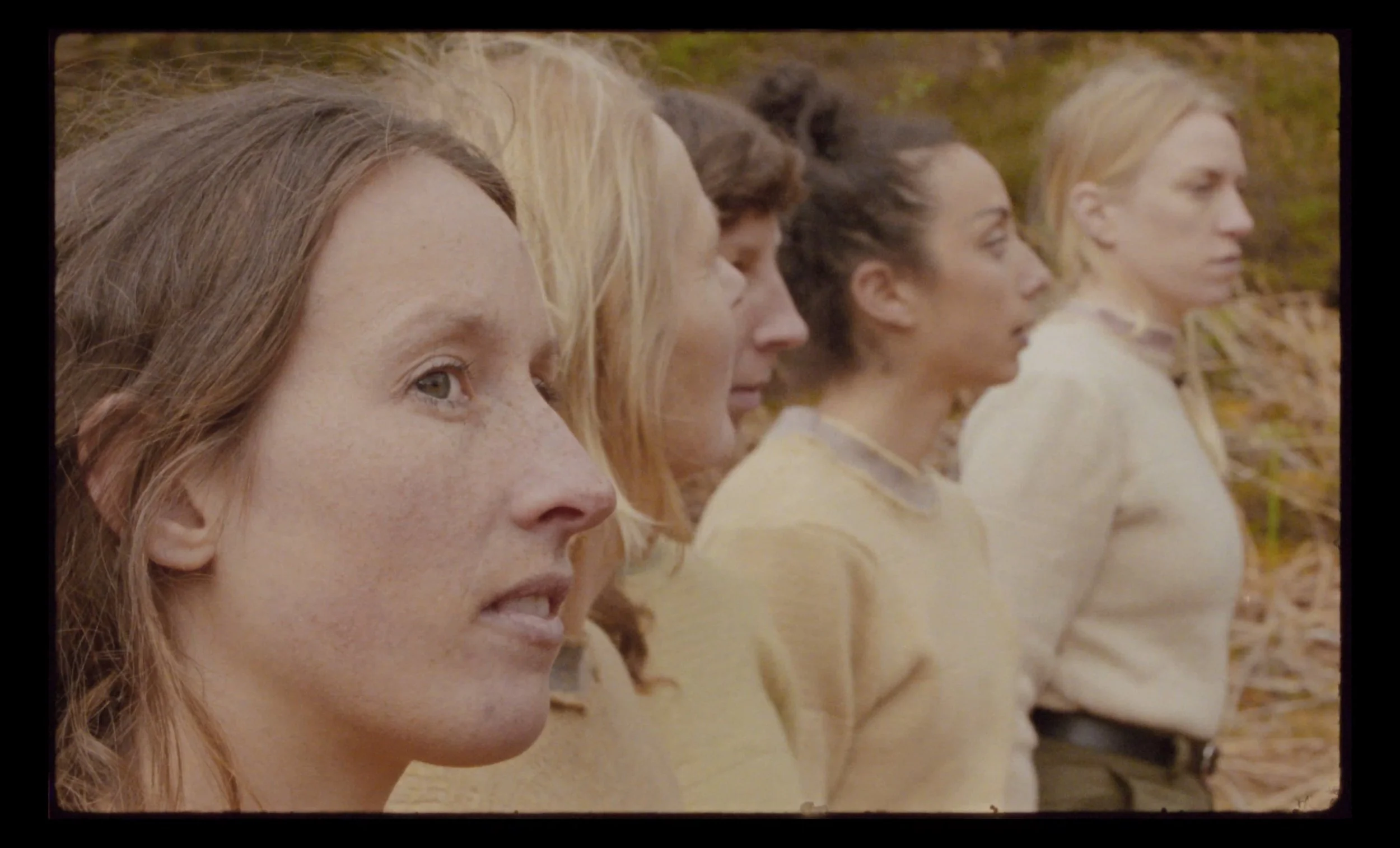
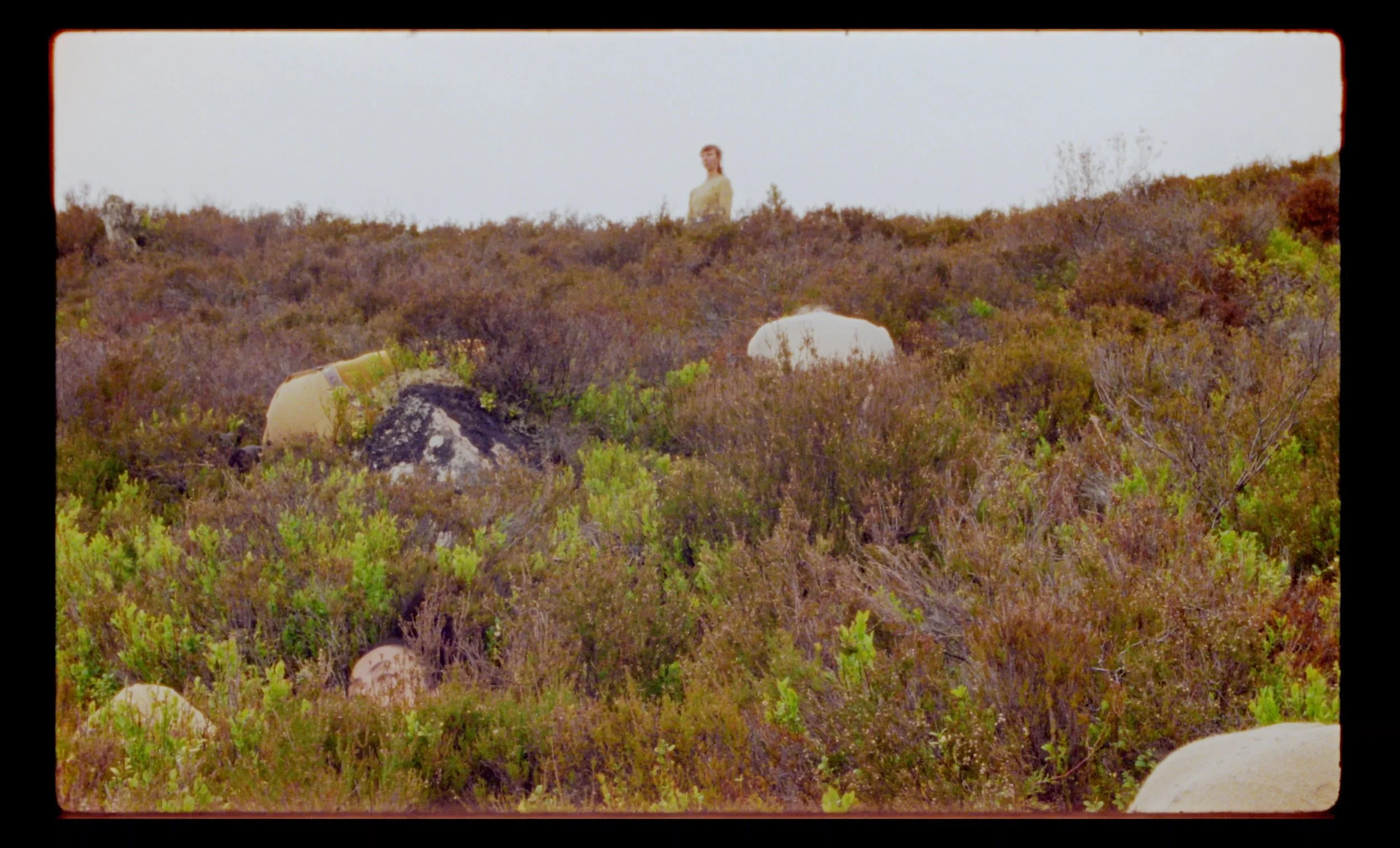
Commissioned by choreographer Simone Kenyon and the National Theatre of Scotland, the film brings together elements of choreography, fragments of Shepherd's text and a polyvocal score by Hanna Tuulikki. Filmed on S16mm film, the film material is the medium and also mediator of an experience of landscape which is fragmentary & embodied, and plays with scales of time and space.
Extract from an essay about the film by writer, David Williams
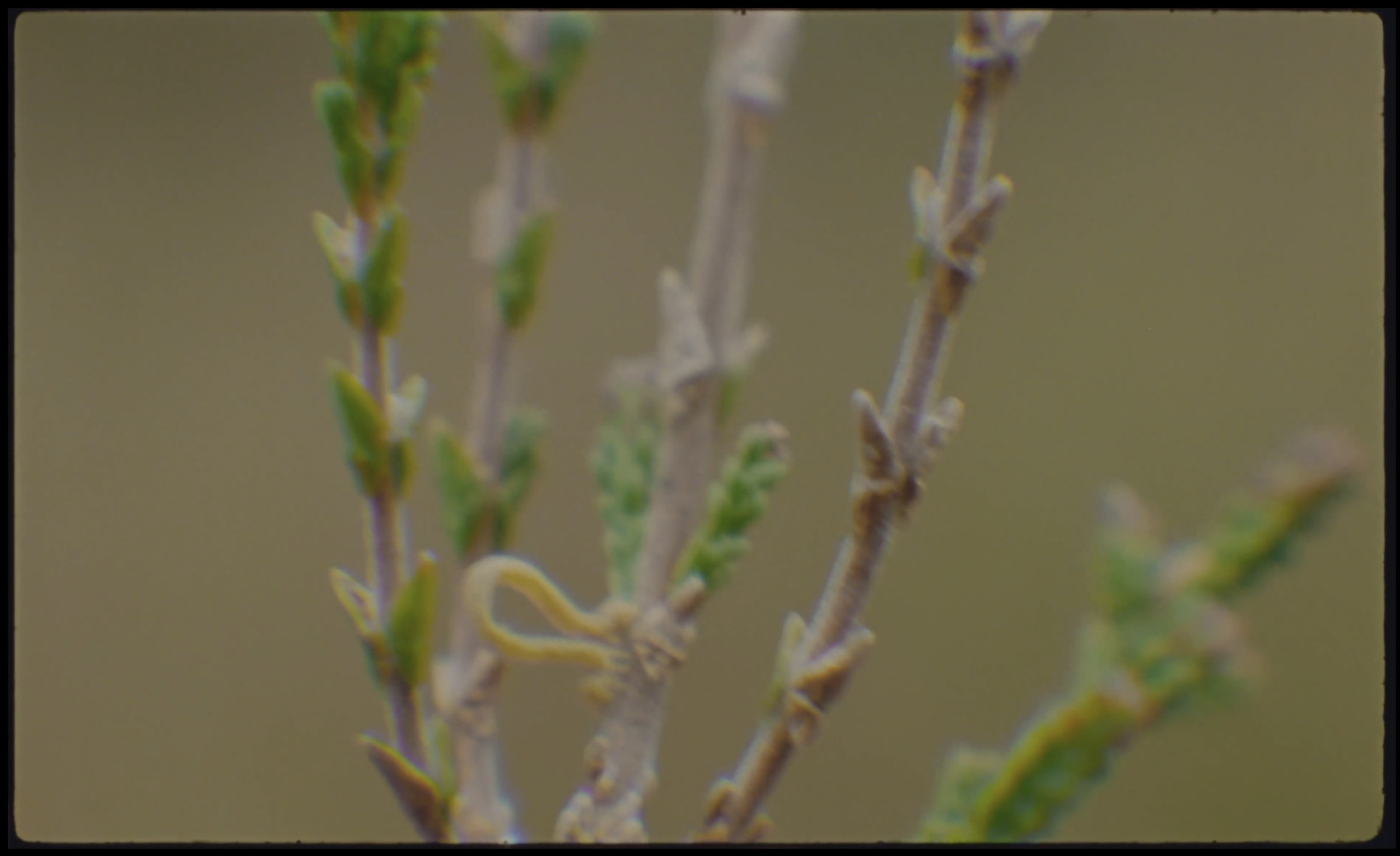
‘…From its opening blurred pan across the dormant body-like folds of the Cairngorms, set against a misty skyline, one might perhaps conceive of the film itself as a soft, porous ‘awakening’ into an attuned, uninsulated receptivity in an immersive, quasi-animist present. “No-one knows the mountain completely who has not slept on it. As one slips over into sleep, the mind grows limpid. The body melts. Perception alone remains. One neither thinks nor desires nor remembers. There is nothing between me and the earth and sky”. And the mountain itself seems to stir into flickering life – a sprig of heather dancing softly in the breeze, a scurrying beetle, the astonishing feel-stretch of a caterpillar exploring a budding twig, the play of light on a spider’s web. The film’s closing fade-to-black, set alongside the sounds of a women’s choir and bird song, returns us to the darkness of (a different) sleep.’
Credits
Director: Lucy Cash / Lead Artist and Choreographer: Simone Kenyon / Performers: Jo Hellier, Claricia Parinussa, Caroline Reagh, Keren Smail and Petra Söör / Voice Over: Shirley Henderson / Choir: Alison Bell, Frances Davis, Beatrice Fettes, Anna Filipek, Caroline Gatt, Sarah Hobbs, Norma Hunter, Julie Lawson, Lisa Lawson, Sandy Leahy, Rebecca Livesay-Wright, Margaret Moore, Adele Napier, Angela Patterson, Sheila Pettitt, Sandra Robertson, Catherine Rose, Hannah May, Sheila Waterhouse, Ailsa Williams, Victoria Woodcock / Choir Leader and Vocalist: Lucy Duncombe / Choir Coordinator - Rebecca Grant / Composer: Hanna Tuulikki / Cinematographer: Peter Emery / Focus Puller: Jason Walker / Sound Recordist and Design: Pete Smith / Additional Sound Mixer: Ali Murray